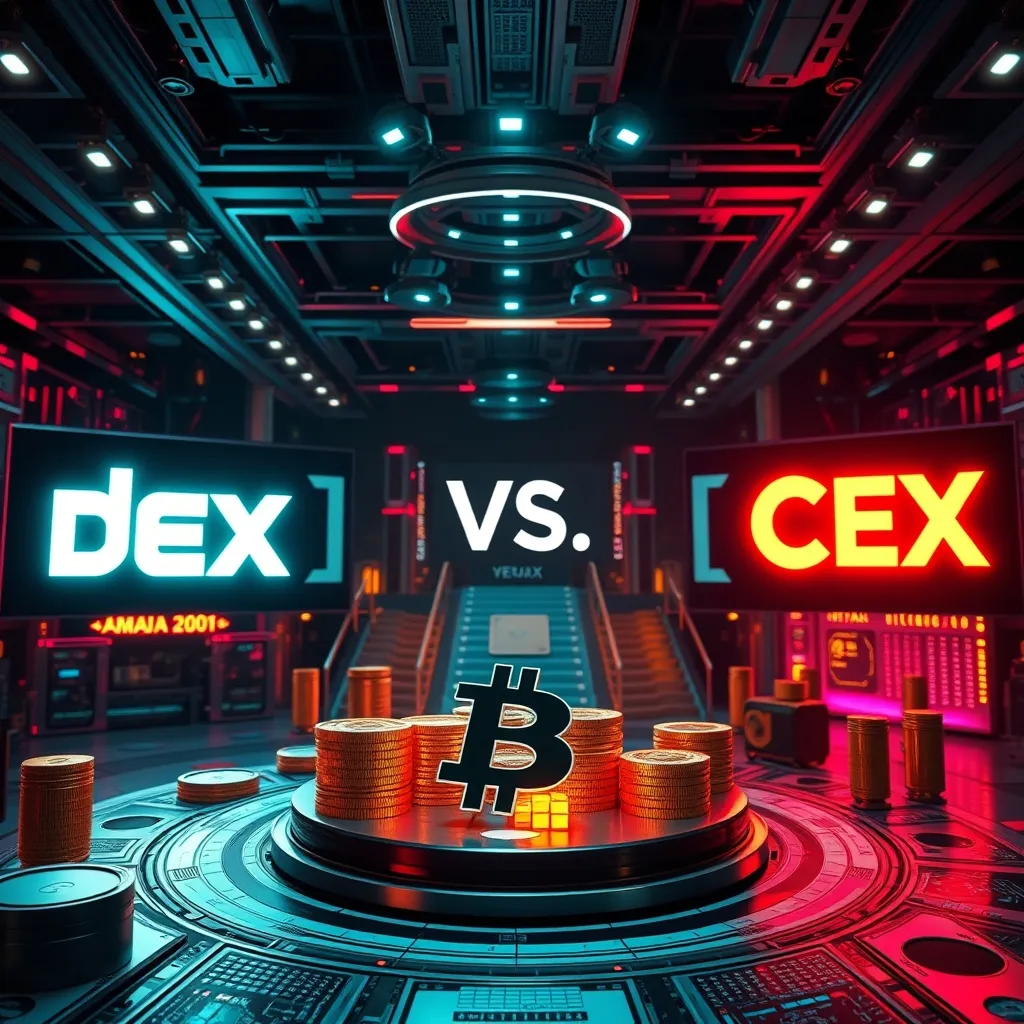
DEX vs CEX: Why the Volume Is Migrating to Decentralized Exchanges
The Year of Transition: 2025-2026
This year of 2025, the cryptocurrency market is living a moment of great transformation. The volume of business is migrating in mass to Decentralized Exchanges (DEXs), while Centralized Exchanges (CEXs) are struggling to maintain their leadership position. It's a scenario that seems surreal, but it's the reality we're living. The question everyone is asking is: why is this happening?
The Crisis of Trust
The answer lies in the crisis of trust affecting CEXs. The lack of transparency, price manipulation, and loss of user funds are just some of the problems that are leading investors to seek safer and more decentralized alternatives. DEXs, on the other hand, offer a safer and more decentralized experience, where users have total control over their cryptocurrencies and don't need to trust any centralized entity.
The Era of Decentralization
The migration of volume to DEXs is a clear sign that the era of decentralization is arriving. DEXs are designed to be more secure, transparent, and decentralized than CEXs. They allow users to trade directly with each other, without the need for a centralized entity. This reduces dependence on third parties and increases user trust.
Why It's Crucial Now
The question is: why is it crucial now to understand the difference between DEXs and CEXs? The answer is simple: the migration of volume to DEXs is an ongoing process, and it's essential to understand the implications of this. CEXs need to adapt to survive, while DEXs need to develop to meet the growing needs of users. It's a moment of great transformation, and it's essential to be prepared for what's to come.
DEX vs CEX: Why Volume Is Migrating to Decentralized
What is and How it Works
Decentralized Exchanges (DEXs) are platforms that allow the trading of cryptocurrencies without the need for intermediaries. They operate on blockchain technology and use consensus algorithms to validate transactions and maintain the security of the network.
Here's an example of how a DEX works:
- Token deposit: The user deposits their tokens into a software wallet, which is connected to the DEX.
- Order creation: The user creates a buy or sell order, specifying the price and quantity they want to trade.
- Order verification: The DEX verifies the order and adds it to the list of pending orders.
- Order execution: When an order is found that meets the conditions of the user's order, the DEX executes the trade and updates the user's wallet.
- Transaction consolidation: The DEX consolidates the transactions and updates the blockchain.
Market Analysis and Potential for Appreciation
The cryptocurrency market is constantly evolving, and DEXs are gaining popularity. The migration of volume to DEXs is driven by several factors, including:
- Security: DEXs are more secure than CEXs, as they don't require the storage of funds in a centralized platform.
- Privacy: DEXs allow users to maintain their privacy, as they don't need to share personal information.
- Flexibility: DEXs allow users to create and execute orders in a more flexible and personalized way.
In terms of potential for appreciation, DEXs are in a strong position. With the growing adoption of blockchain and cryptocurrencies, DEXs are becoming a more attractive option for investors. Additionally, DEXs are open to new business opportunities, such as the creation of tokens and the provision of decentralized financial services.
Comparison with Competitors or Past Cycles
DEXs are in a unique position in the cryptocurrency market. While CEXs are limited by their centralized nature, DEXs offer a more secure, private, and flexible experience. Additionally, DEXs are in a strong position in terms of potential for appreciation, with the growing adoption of blockchain and cryptocurrencies.
In comparison with past cycles, DEXs are in a stronger position than CEXs in 2017, when the cryptocurrency market was booming. DEXs are more secure and flexible than CEXs, and offer a more attractive option for investors.
In summary, DEXs are in a strong position in the cryptocurrency market, with a more secure, private, and flexible experience than CEXs. With the growing adoption of blockchain and cryptocurrencies, DEXs are becoming a more attractive option for investors, and have a strong potential for appreciation.
Conclusion: The Future of the Cryptocurrency Market in 2030
In the near future, the cryptocurrency market will be completely transformed. With the migration of volume to DEXs, decentralized platforms will become the norm. The lack of intermediaries, transparency, and security of smart contracts will make DEXs the preferred option for investors.
By 2030, DEXs will have dominated the market, offering a more secure, fast, and efficient trading experience. CEXs, on the other hand, will be seen as an outdated option, limited and prone to risks. Decentralization will be the key to the future of the cryptocurrency market.
FAQ
Q: What is a DEX and how does it work?
A: A DEX (Decentralized Exchange) is a platform that allows the trading of cryptocurrencies without the need for intermediaries. It operates on blockchain technology and uses consensus algorithms to validate transactions and maintain the security of the network.
Q: Why are DEXs gaining popularity?
A: DEXs are gaining popularity because they offer a more secure, private, and flexible experience than CEXs. They don't require the storage of funds in a centralized platform, and allow users to maintain their privacy.
Q: What are the main benefits of DEXs?
A: The main benefits of DEXs are security, privacy, and flexibility. They offer a more secure and private experience than CEXs, and allow users to create and execute orders in a more flexible and personalized way.
Disclaimer
Remember that the cryptocurrency market is highly volatile and prone to risks. DEXs and CEXs may have risks associated with them, such as the loss of funds or price manipulation. It's essential to do your own research and make informed decisions before investing in any cryptocurrency.
Perguntas Frequentes
Nunca deixe todo seu capital em exchanges
Aprenda os princípios de autocustódia, carteiras de hardware e proteção contra ataques de phishing.
O que é DeFi?
Finanças Descentralizadas (DeFi) são protocolos blockchain que replicam serviços financeiros tradicionais (empréstimos, troca, poupança) sem intermediários, usando smart contracts em redes como Ethereum, Arbitrum, Base, etc.
O que é yield farming?
Estratégia de fornecer liquidez a protocolos DeFi (pools de liquidez, lending) em troca de recompensas em tokens de governança ou juros. Envolve riscos como impermanent loss, smart contract risk e volatilidade dos tokens de recompensa.
Quer dar o próximo passo?
Abra sua conta na corretora parceira oficial com liquidez global, depósito via PIX e bônus de boas-vindas.
Guarde seus Ativos com Carteiras Físicas (Hardware Wallets)
Deixar criptomoedas em corretoras expõe seu patrimônio a riscos de bloqueios e invasões. As Hardware Wallets isolam suas chaves privadas totalmente da internet, garantindo que apenas você tenha controle do seu dinheiro.
Ledger Flex (Touchscreen E-Ink)
A nova carteira de hardware com tela touch E-Ink segura, conexão Bluetooth, USB-C e proteção para mais de 5.500 criptoativos.
- Tela Touchscreen E-Ink de alta definição
- Chip Secure Element CC EAL6+ anti-violação
- Personalização de tela de bloqueio com NFT ou foto
- Compatível com iOS, Android, Mac e Windows
Ledger Nano S Plus (Matte Black)
O clássico modelo de entrada com tela nítida, memória ampliada para até 100 aplicativos simultâneos e blindagem militar.
- Preço mais acessível para iniciantes
- Chip CC EAL6+ para isolamento total de chaves
- Gerencie pelo aplicativo oficial Ledger Live
- Envio internacional com garantia oficial
Trezor Safe 3 & Safe 5
A pioneira e referência absoluta em transparência e segurança de chaves privadas para Bitcoin e criptoativos.
- Arquitetura Open Source auditável
- Tela colorida com confirmação física
- Proteção com Shamir Backup
- Suporte nativo a Bitcoin e EVMs
Opere Cripto com a Mesma Plataforma dos Traders Institucionais
Pare de operar no escuro. Tenha acesso à ferramenta de análise gráfica mais utilizada do planeta com gráficos ao vivo, candles sem atraso e suporte completo a centenas de pares cripto.
Ao criar sua conta através d'A Cifra, você ganha um cupom de $15 de desconto na sua assinatura Pro e 30 dias de teste grátis.
Plataformas Recomendadas para Negociação e Staking
Compare as maiores corretoras globais reguladas com suporte a depósitos instantâneos via PIX, taxas reduzidas e bônus de abertura de conta.
Bitget
Exchange Global de Alta Liquidez
- Até $5.000 em bônus
- Taxas baixas a partir de 0.1%
- Copy trading automatizado
- Depósitos rápidos via PIX

Binance
Maior Corretora do Mundo
- Cashback exclusivo em USDC
- Mais de 600 criptomoedas
- Maior volume global
- Staking flexível e bloqueado

OKX
Infraestrutura Web3 & Trading
- Mystery Box de até $10.000
- Carteira Web3 integrada
- Taxas competitivas para trading
- Plataforma profissional auditada

Gate.io
Líder em Diversidade de Altcoins
- Mais de 1.700 altcoins listadas
- Acesso antecipado a tokens
- Startup Launchpad com airdrops
- Bônus de boas-vindas ativo

Kraken
Pioneira em Segurança e Custódia
- Segurança institucional de referência
- Suporte especializado 24/7
- Margin trading avançado
- Interface Pro com gráficos fluidos

Coinbase
Referência em Simplicidade
- Ganhe $10 em Bitcoin no cadastro
- Empresa listada na Nasdaq (COIN)
- Interface ultra simples para iniciantes
- Segurança regulatória global
Ao utilizar os links de convite acima, você garante os benefícios oficiais de cadastro e apoia a produção de jornalismo educativo e análises independentes da A Cifra.
Conteúdo educacional e informativo, sem caráter de recomendação de investimento personalizada. Rentabilidades passadas não garantem resultados futuros. Antes de investir, consulte um profissional certificado pela CVM.
DeFi é seguro?
Riscos principais: bugs em smart contracts (auditoria mitiga), rug pulls (projetos anônimos), oracle manipulation, e risco sistêmico (ex: colapso da Terra/LUNA). Diversifique, use protocolos auditados e com histórico.
Como começar em DeFi?
- Compre ETH ou stablecoins em exchange. 2) Transfira para carteira não-custodial (MetaMask, Rabby). 3) Conecte em protocolos grandes (Aave, Uniswap, Curve). 4) Comece com valores pequenos para aprender.
Newsletter Semanal
Análises profundas, alertas de oportunidades e guias práticos direto no seu email.
✓ Sem spam ✓ Cancele quando quiser ✓ 100% gratuito