OpenAI offers $42 billion stake to the US government!
The intersection of state power, venture capital, and artificial intelligence (AI) has just reached an unprecedented inflection point in the history of modern technology. Sam Altman, CEO of OpenAI, has formally proposed a direct 5% equity stake in the company to the United States government—a slice valued at a staggering $42 billion, based on the giant's most recent implicit valuation of approximately $840 billion in national-scale future projection scenarios.
More than a simple financial transaction, Altman’s move carries a bold geopolitical ambition: he advocates that all major AI companies within the Western ecosystem do the same.
For investors, analysts, and developers in the Web3 and cryptocurrency ecosystem, this news is not just another Silicon Valley corporate event. It represents the birth of a new hybrid asset class bridging state and corporation, and draws a clear line in the sand between two possible futures: a model of Sovereign Centralized AI (state-backed) and a model of Decentralized AI (DeAI), built on Web3's cryptographic rails.
In this deep fundamental analysis for A Cifra, we deconstruct the financial mechanics behind this proposal, the risks of regulatory capture, the impact on AI tokens (such as TAO, FET, and WLD), and how the crypto-asset market is positioned to act as the ultimate counterweight to this new "Algorithmic Leviathan."
The $42 Billion Pact: Decoding OpenAI’s Proposal to the US Government
Sam Altman's proposal did not emerge in a vacuum. It comes at a time when OpenAI is finalizing its structural transition from a non-profit research organization to a traditional, profit-driven commercial entity. To cement this transition and secure the capital required for the next frontier of artificial general intelligence (AGI), OpenAI needs two things that only sovereign states possess in abundance: massive energy subsidies and geopolitical/regulatory protection.
[US Government] <--- (Regulatory Protection + Energy + Subsidies) ---> [OpenAI]
      |                                                                  |
      + <----------------- (5% Equity / $42B) ---------------------------+
The Financial Details and Implicit Valuation
Assigning a $42 billion value to a 5% stake puts OpenAI’s valuation in an orbit that defies traditional venture capital metrics. Currently, in private funding rounds, OpenAI has been valued between $150 billion and $157 billion.
The $42 billion figure for 5% suggests an implied projected valuation of $840 billion, which anticipates near-monopoly dominance over global AI infrastructure or the inclusion of tangible national infrastructure assets (such as government supercomputers and dedicated power grids) on the company’s balance sheet.
This astronomical valuation reflects the "hyperscale thesis." For OpenAI, AI is not merely software-as-a-service (SaaS) but a new global computing layer that will require trillions of dollars in semiconductor (chip) investments and nuclear power plants to fuel its data centers. By offering equity to the US government, Altman is attempting to align the state's financial interests with his company's commercial success.
The Altman Doctrine of State Alignment
Altman's appeal for "all major AI companies" to cede 5% of their ownership to the US government aims to build an insurmountable barrier to entry for new competitors. Under the guise of "national security" and "ethical alignment," this proposal establishes a state-supervised tech cartel.
- Technological Nationalism: AI is now treated as the most critical defense technology of the 21st century, equivalent to the development of nuclear weapons during the Manhattan Project.
- Infrastructure Capture: By onboarding the government onto its cap table, OpenAI guarantees priority access to the US power grid, fast-tracked licensing for Small Modular Reactors (SMRs), and direct subsidies from the CHIPS Act.
- Antitrust Immunity: Historically, it is extremely difficult for the Department of Justice (DoJ) to break up or severely sanction a company in which the government itself holds a direct, multi-billion-dollar stake.
Nunca deixe todo seu capital em exchanges
Aprenda os princípios de autocustódia, carteiras de hardware e proteção contra ataques de phishing.
The Intersection of Centralized AI and Web3: Why the Crypto Market Must Care?
For proponents of decentralization, the proposed merger between OpenAI and the US state is the loudest alarm ever sounded. It validates the thesis that centralized artificial intelligence infrastructure will inevitably drift toward surveillance, censorship, and state control. This is where Web3 steps in—not just as an investment alternative, but as an existential necessity.
+------------------------------------+------------------------------------+
|        Centralized AI (OpenAI)     |        Decentralized AI (Web3)     |
+------------------------------------+------------------------------------+
| • State/Corporate Governance       | • Governance via DAOs and Tokens   |
| • Permissioned Infrastructure      | • DePIN (Permissionless Computing) |
| • Centralized Identity (KYC)       | • Zero-Knowledge Cryptography      |
| • Regulatory Capture and Monopoly  | • Open-Source & Crypto Incentives  |
+------------------------------------+------------------------------------+
Technological Sovereignty vs. Decentralization
If the US government owns 5% of OpenAI, content moderation policies, API access, and the very direction of GPT's development will be influenced by Washington's geopolitical interests. The risk of the "weaponization" of AI for ideological censorship and narrative control becomes a highly realistic scenario.
Web3 offers the antidote: permissionless computing networks and open-source models running on decentralized protocols. In these systems, governance does not belong to a state committee, but rather to globally distributed token holders, ensuring network neutrality.
The Role of Worldcoin (WLD) and Digital Identity in the New Paradigm
It is impossible to analyze Sam Altman’s moves without looking at his other major project: Worldcoin (WLD). Altman’s vision is a closed, full-loop system:
- OpenAI develops the AI that automates human labor and generates unprecedented wealth.
- Worldcoin acts as the global identity infrastructure ("Proof of Personhood") to distinguish humans from AI agents in a world flooded with synthetic content.
- The WLD token (or an integrated sovereign digital currency) serves as the distribution mechanism for a Universal Basic Income (UBI) funded by the dividends of this superintelligence.
If the US government becomes a partner in OpenAI, Worldcoin gains a direct channel to become the state-preferred (or state-tolerated) identity infrastructure. However, for the Web3 community, this represents the worst-case scenario of biometric surveillance (the irises scanned by Worldcoin's Orbs), creating an urgent need for alternative identity solutions based on Zero-Knowledge Proofs (ZK-Proofs) and self-sovereign data.
Fundamental Analysis: The Rise of "Compute Geopolitics"
In traditional financial markets, tech stocks are valued on revenue multiples (P/S) or discounted cash flow (DCF). In the new paradigm uniting AI, energy, and Web3, the most critical fundamental valuation metric has shifted to access to raw compute (FLOPs) and energy.
Silicon, Energy, and Infrastructure Tokenomics
OpenAI estimates that the cost to train its next-generation AI models will scale to tens of billions of dollars. Whoever controls the semiconductors and the electricity controls the future of intelligence.
In the Web3 space, this has fueled the explosive growth of DePIN (Decentralized Physical Infrastructure Networks). Decentralized compute projects are proving they can aggregate idle global processing power far more cheaply and resiliently than corporate cloud monopolies (AWS, Azure, Google Cloud).
[Idle GPU Providers] \
[Crypto Miners]      ------> [DePIN Protocol (e.g., Akash/Render)] ------> [AI Developers]
[Independent Data Centers] /
- Akash Network (AKT): Functions as an open marketplace for cloud compute, allowing AI developers to buy GPU processing power in a decentralized manner, free from the risk of state censorship.
- Render Network (RNDR/RENDER): Leverages decentralized GPUs for high-performance rendering and AI compute. With Render's migration to the Solana blockchain, its capacity for rapid settlement and micro-payments has accelerated its adoption by open-model developers.
Quer dar o próximo passo?
Abra sua conta na corretora parceira oficial com liquidez global, depósito via PIX e bônus de boas-vindas.
Guarde seus Ativos com Carteiras Físicas (Hardware Wallets)
Deixar criptomoedas em corretoras expõe seu patrimônio a riscos de bloqueios e invasões. As Hardware Wallets isolam suas chaves privadas totalmente da internet, garantindo que apenas você tenha controle do seu dinheiro.
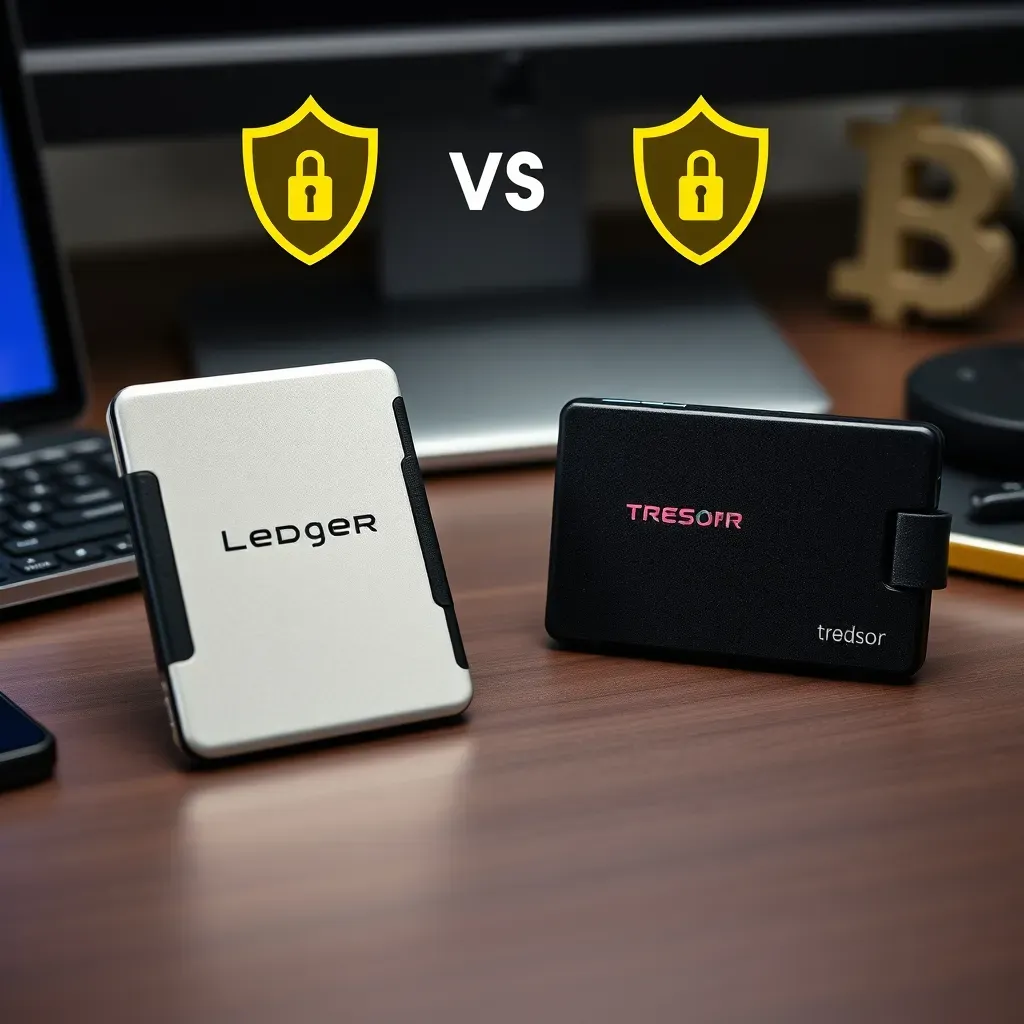
Ledger Flex (Touchscreen E-Ink)
A nova carteira de hardware com tela touch E-Ink segura, conexão Bluetooth, USB-C e proteção para mais de 5.500 criptoativos.
- Tela Touchscreen E-Ink de alta definição
- Chip Secure Element CC EAL6+ anti-violação
- Personalização de tela de bloqueio com NFT ou foto
- Compatível com iOS, Android, Mac e Windows
Ledger Nano S Plus (Matte Black)
O clássico modelo de entrada com tela nítida, memória ampliada para até 100 aplicativos simultâneos e blindagem militar.
- Preço mais acessível para iniciantes
- Chip CC EAL6+ para isolamento total de chaves
- Gerencie pelo aplicativo oficial Ledger Live
- Envio internacional com garantia oficial
Trezor Safe 3 & Safe 5
A pioneira e referência absoluta em transparência e segurança de chaves privadas para Bitcoin e criptoativos.
- Arquitetura Open Source auditável
- Tela colorida com confirmação física
- Proteção com Shamir Backup
- Suporte nativo a Bitcoin e EVMs
Gaste Criptomoedas e Ganhe Cashback em Bitcoin e Dólar
Transforme seus ganhos em poder de compra imediato sem precisar sacar para o banco tradicional. Os Cartões Cripto Internacionais permitem pagar contas, restaurantes e compras online recebendo parte do valor de volta em criptomoedas.
Cartão Cripto Global (Bitget Card)
Converta USDT/BTC na hora do pagamento com bandeira Visa/Mastercard aceita no mundo todo.
- Sem taxa de anuidade ou emissão oculta
- Pagamento por aproximação via Apple Pay / Google Pay
- Cashback creditado direto na sua conta
- Limite de gastos flexível em saldo de criptoativos
Binance Card & Pay
Use seus fundos spot e earn para compras instantâneas em qualquer maquininha física ou site.
- Conversão automática com a menor taxa de spread
- Gerenciamento total de limites pelo app oficial
- Descontos exclusivos em passagens e reservas de hotel
- Suporte a pagamentos via QR Code instantâneo
Plataformas Recomendadas para Negociação e Staking
Compare as maiores corretoras globais reguladas com suporte a depósitos instantâneos via PIX, taxas reduzidas e bônus de abertura de conta.

Bitget
Exchange Global de Alta Liquidez
- Até $5.000 em bônus
- Taxas baixas a partir de 0.1%
- Copy trading automatizado
- Depósitos rápidos via PIX

Binance
Maior Corretora do Mundo
- Cashback exclusivo em USDC
- Mais de 600 criptomoedas
- Maior volume global
- Staking flexível e bloqueado

OKX
Infraestrutura Web3 & Trading
- Mystery Box de até $10.000
- Carteira Web3 integrada
- Taxas competitivas para trading
- Plataforma profissional auditada

Gate.io
Líder em Diversidade de Altcoins
- Mais de 1.700 altcoins listadas
- Acesso antecipado a tokens
- Startup Launchpad com airdrops
- Bônus de boas-vindas ativo

Kraken
Pioneira em Segurança e Custódia
- Segurança institucional de referência
- Suporte especializado 24/7
- Margin trading avançado
- Interface Pro com gráficos fluidos

Coinbase
Referência em Simplicidade
- Ganhe $10 em Bitcoin no cadastro
- Empresa listada na Nasdaq (COIN)
- Interface ultra simples para iniciantes
- Segurança regulatória global
Ao utilizar os links de convite acima, você garante os benefícios oficiais de cadastro e apoia a produção de jornalismo educativo e análises independentes da A Cifra.
Conteúdo educacional e informativo, sem caráter de recomendação de investimento personalizada. Rentabilidades passadas não garantem resultados futuros. Antes de investir, consulte um profissional certificado pela CVM.
The Web3 Ecosystem’s Response: The Growth of DeAI
While OpenAI proposes a pact with the government, the Decentralized AI (DeAI) sector in Web3 is consolidating its own multi-billion-dollar mergers to build competitive economies of scale.
Bittensor (TAO): The Decentralized Intelligence Network
Bittensor is arguably the most crucial fundamental project at the intersection of crypto and AI. Rather than being a single centralized model, Bittensor is a neural network protocol that incentivizes collaborative artificial intelligence.
- Tokenomics: The TAO token is emitted to reward "subnets" (subnetworks) that provide the best outputs and computational power for specific tasks (such as image generation, translation, coding, and financial analysis).
- Censorship Resistance: There is no off-button for Bittensor. If the US government takes control of OpenAI, Bittensor will continue to operate autonomously worldwide, powered by globally distributed nodes.
Artificial Superintelligence Alliance (FET)
The merger of Fetch.ai, SingularityNET, and Ocean Protocol under the unified ticker FET (with plans to transition to ASI) is a direct consortium-led response to the Big Tech oligopoly. This alliance aims to build an open infrastructure of autonomous AI agents that can transact with one another and execute complex financial tasks directly on-chain, bypassing government-controlled legacy payment systems.
Regulatory Implications and the Future of DeFi
OpenAI’s proposal to cede a 5% stake to the US government aims to accelerate the regulatory capture already underway. Under the guidelines of the Biden administration's AI Executive Order, strict reporting requirements are already in place for models exceeding certain training compute thresholds.
Regulatory Capture and OpenAI’s "Moat"
By aligning directly with regulatory bodies, OpenAI is building a "regulatory moat." Smaller startups and open-source developers will lack the legal compliance infrastructure and financial resources to meet state-mandated safety and auditing requirements.
This will force open-source AI innovation to migrate entirely to Web3. Blockchains will become the only safe havens for free AI development, where code is executed as law (via Smart Contracts) and data and compute transactions occur pseudonymously.
DeFi as the Parallel Financial System for the AI Economy
One of the most overlooked aspects of the AI-crypto convergence is the financial system used by AI agents. An autonomous AI agent cannot open a traditional bank account at JPMorgan or secure a Mastercard—legacy banking systems require physical identity verification (human KYC/AML).
[Autonomous AI Agent]
       |
       +---> Cannot open a traditional bank account (Requires Human KYC)
       |
       +---> Uses Web3 Rails (Stablecoins, Smart Contracts, DeFi Yields)
Conversely, AI agents can interact natively with Web3. They can:
- Create non-custodial wallets on networks like Ethereum or Solana.
- Pay for compute and data using stablecoins (USDC/USDT) or native utility tokens.
- Borrow, lend, and generate yield on DeFi protocols like Aave and Uniswap in a fully programmatic way.
As centralized AI merges with the state, decentralized finance (DeFi) will become the exclusive liquidity rail for the independent AI agent economy.
Newsletter Semanal
Análises profundas, alertas de oportunidades e guias práticos direto no seu email.
✓ Sem spam ✓ Cancele quando quiser ✓ 100% gratuito
The Geopolitical Chessboard of Artificial Intelligence
OpenAI’s proposal to hand over $42 billion in equity to the US government is definitive confirmation that Artificial Intelligence is the most valuable and strategically critical asset of our era. It ends the romantic age of AI as an open academic research endeavor and ushers in the era of AI as an instrument of state power and geopolitical hegemony.
For the long-term Web3 investor, this scenario lays out a clear outlook:
- Acceleration of DeAI and DePIN: Projects focused on decentralized compute (like Akash and Render) and open intelligence networks (like Bittensor) are no longer merely speculative assets. They represent the only viable alternative infrastructure to the state-corporate monopoly.
- Supply-Side Valuation: The fundamental value of AI cryptocurrencies will reside in their ability to coordinate real-world physical resources (chips, electricity, bandwidth) globally and frictionlessly.
- The Identity War: The battle for "identity control" between government-led solutions and sovereign cryptographic protocols (such as ZK-Proofs and decentralized identities—DIDs) will be one of the largest value catalysts over the next five years.
The realistic optimism of Web3 lies in the fact that, for the first time in history, the rise of a potentially monopolistic technology coincides with the maturity of a decentralized coordination technology—blockchain. The fate of human and artificial intelligence will not be decided solely in the corridors of Washington or the boardrooms of OpenAI, but on open, immutable, and global networks that anyone, anywhere, can access and audit.
Perguntas Frequentes
O que são criptomoedas?
Ativos digitais baseados em criptografia e blockchain, descentralizados e programáveis. Bitcoin foi a primeira (2009); hoje existem milhares com diferentes propostas de valor (pagamento, smart contracts, privacidade, governança, etc.).
Como declarar cripto no Imposto de Renda?
Ficha "Bens e Direitos", código 81. Informe exchange/carteira, quantidade e valor de aquisição em 31/12. Vendas mensais > R$ 35k geram ganho de capital (15-22,5%). Use controle de custo médio (FIFO).
Qual a diferença entre exchange e carteira?
Exchange (corretora) guarda suas chaves (custodial) — risco de contraparte. Carteira (wallet) você guarda as chaves (non-custodial) — responsabilidade total sua. "Not your keys, not your coins".