Translation:
Taiwan to Launch First Regulated Stablecoin in 2026: Historic Milestone in Asia
In a move that could redefine the landscape of stablecoins in Asia, Taiwan has officially announced the launch of its first regulated stablecoin for the second quarter of 2026. The initiative, led by the Financial Supervisory Commission (FSC) of Taiwan in partnership with local banks and technology companies, marks a historic precedent in the region and could accelerate the adoption of regulated cryptocurrencies across Asia.
Official Announcement
Project Details
Provisional Name: TWD Stablecoin (TWDS) Launch: Q2 2026 (April-June) Backing: 100% in Taiwanese dollars (TWD) Regulator: Financial Supervisory Commission (FSC) Partners: Bank of Taiwan, Cathay United Bank, Fubon Bank Technology: Hybrid blockchain (public + private)
Key Features:
- 1:1 parity with the Taiwanese dollar (TWD)
- Monthly audit by independent firms
- 100% reserves in regulated banks
- KYC/AML mandatory for all users
- Interoperability with traditional banking systems
- Programmability via smart contracts
Implementation Schedule
Q4 2025 (current):
- Public consultation on regulatory framework
- Selection of technology partners
- Definition of technical standards
Q1 2026:
- Launch of testnet
- Testing with financial institutions
- Pilot program with 10,000 users
Q2 2026:
- Official launch on mainnet
- Integration with Taiwanese exchanges
- Availability to the general public
Q3-Q4 2026:
- Expansion to commercial payments
- Integration with payment systems
- Evaluation of international expansion
Why is Taiwan Doing This?
1. Geopolitical Competition
Asian Context:
- China: Digital yuan (e-CNY) already in use since 2020
- Japan: Testing digital yen since 2023
- South Korea: Digital won in pilot phase
- Singapore: Project Ubin advanced
- Hong Kong: e-HKD in development
Taiwan's Position:
- Cannot fall behind in the digital race
- Needs to maintain financial competitiveness
- Opportunity to differentiate from China
2. Financial Innovation
Declared Objectives:
- Modernize the financial system
- Reduce transaction costs
- Facilitate cross-border payments
- Attract fintech companies
- Position Taiwan as the crypto hub of Asia
Expected Benefits:
- Instant transactions 24/7
- 80% lower costs than bank transfers
- Financial inclusion (2 million without bank accounts)
- Transparency and traceability
3. Market Demand
Taiwanese Statistics:
- 5.2 million Taiwanese possess crypto (22% of the population)
- $8.5 billion in monthly trading volume
- 15 exchanges registered locally
- $2.1 billion in circulating stablecoins
Current Problem:
- Unregulated stablecoins (USDT, USDC)
- Risk of depegging
- Lack of consumer protection
- Difficulty integrating with traditional banking
Solution: Regulated stablecoin
Stablecoin vs CBDC: What's the Difference?
Technical Comparison
| Feature | Regulated Stablecoin (TWDS) | CBDC (Digital Yuan) |
|---|---|---|
| Issuer | Regulated private banks | Central Bank |
| Backing | Bank reserves | Central bank liability |
| Blockchain | Public/Hybrid | Private |
| Programmability | Yes (smart contracts) | Limited |
| Privacy | Moderate (KYC) | Low (traceable) |
| Decentralization | Partial | Centralized |
| Interoperability | High | Low |
| Crypto Adoption | Facilitated | Restricted |
Nunca deixe todo seu capital em exchanges
Aprenda os princípios de autocustódia, carteiras de hardware e proteção contra ataques de phishing.
Why Stablecoin and Not CBDC?
Advantages of Taiwan's Approach:
1. Flexibility:
- Can use public blockchains (e.g., Ethereum, Polygon)
- Interoperable with DeFi protocols
- Programmable via smart contracts
2. Innovation:
- Private sector can innovate
- Competition between issuers
- Diverse use cases
3. Privacy:
- Less tracking than CBDC
- Balance between privacy and compliance
- Not a tool for state control
4. Adoption:
- Compatible with existing crypto wallets
- Can be listed on exchanges
- Facilitates on/off ramp
5. Cost:
- Less expensive infrastructure
- Does not require a new system
- Leverages existing blockchain
Impact on the Stablecoin Market
Current Stablecoin Market
Global Market Cap (December 2025):
- USDT (Tether): $95 billion (60%)
- USDC (Circle): $42 billion (26%)
- DAI (MakerDAO): $8 billion (5%)
- BUSD (Binance): $5 billion (3%)
- Others: $10 billion (6%)
- Total: $160 billion
Problems with Current Stablecoins:
- Lack of transparency (Tether)
- Risk of depegging
- Uncertain regulation
- Centralization (Circle, Tether)
How TWDS Can Change the Game
Competitive Advantages:
1. Clear Regulation:
- Defined regulatory framework
- Consumer protection
- Mandatory audit
- Verifiable reserves
2. Institutional Confidence:
- Issued by regulated banks
- Supervised by FSC
- Implicit government guarantee
3. Banking Integration:
- On/off ramp facilitated
- Instant transactions
- No bank restrictions
4. Local Use Cases:
- Payments in TWD
- Remittances to/from Taiwan
- Commercial transactions with Asia
Expected Impact
Short-term (2026):
- Adoption of 500k-1M users in Taiwan
- $500 million-$1 billion market cap
- Listing on Taiwanese exchanges
Medium-term (2027-2028):
- Expansion to Asia (Japan, South Korea, Singapore)
- $5-10 billion market cap
- Integration with DeFi protocols
Long-term (2029+):
- Regional standard for stablecoins
- $20-50 billion market cap
- Model replicated by other countries
Reaction from the Crypto Market
Exchanges
Binance:
"We applaud Taiwan's initiative. Regulated stablecoins are the future. We're ready to list TWDS as soon as it launches."
Coinbase:
"Taiwan is showing leadership. Clear regulation is what the market needs. USDC can coexist and even collaborate with TWDS."
Taiwanese Exchanges (MaiCoin, BitoPro, MAX):
- Already confirmed support
- Integration planned for Q2 2026
- Pairs: TWDS/USDT, TWDS/BTC, TWDS/ETH
DeFi Protocols
Aave:
"If TWDS is compatible with EVM, we can integrate it as collateral. Regulated stablecoins bring legitimacy to DeFi."
Uniswap:
"Pools with TWDS will be welcome. More stablecoins mean more options for users."
Curve Finance:
"Regulated stablecoins can have dedicated pools with incentives. We await technical specifications."
Analysts
Messari:
"Taiwan is ahead of the curve. Regulated stablecoin is better than CBDC for crypto adoption. It can be a model for other countries."
Chainalysis:
"Clear regulation + innovation = winning combination. TWDS can capture 5-10% of the Asian stablecoin market in 3 years."
JP Morgan:
"Taiwan's initiative is pragmatic. Regulated stablecoins are a bridge between TradFi and DeFi. We expect more countries to follow."
Comparison with Other Initiatives
Singapore (Project Guardian)
Similarities:
- Focus on clear regulation
- Public-private partnership
- Regulatory sandbox testing
Differences:
- Singapore focuses on tokenization of assets
- Taiwan focuses on retail stablecoin
- Singapore is more institutional, Taiwan is more retail
Quer dar o próximo passo?
Abra sua conta na corretora parceira oficial com liquidez global, depósito via PIX e bônus de boas-vindas.
Guarde seus Ativos com Carteiras Físicas (Hardware Wallets)
Deixar criptomoedas em corretoras expõe seu patrimônio a riscos de bloqueios e invasões. As Hardware Wallets isolam suas chaves privadas totalmente da internet, garantindo que apenas você tenha controle do seu dinheiro.
Ledger Flex (Touchscreen E-Ink)
A nova carteira de hardware com tela touch E-Ink segura, conexão Bluetooth, USB-C e proteção para mais de 5.500 criptoativos.
- Tela Touchscreen E-Ink de alta definição
- Chip Secure Element CC EAL6+ anti-violação
- Personalização de tela de bloqueio com NFT ou foto
- Compatível com iOS, Android, Mac e Windows
Ledger Nano S Plus (Matte Black)
O clássico modelo de entrada com tela nítida, memória ampliada para até 100 aplicativos simultâneos e blindagem militar.
- Preço mais acessível para iniciantes
- Chip CC EAL6+ para isolamento total de chaves
- Gerencie pelo aplicativo oficial Ledger Live
- Envio internacional com garantia oficial
Trezor Safe 3 & Safe 5
A pioneira e referência absoluta em transparência e segurança de chaves privadas para Bitcoin e criptoativos.
- Arquitetura Open Source auditável
- Tela colorida com confirmação física
- Proteção com Shamir Backup
- Suporte nativo a Bitcoin e EVMs
Gaste Criptomoedas e Ganhe Cashback em Bitcoin e Dólar
Transforme seus ganhos em poder de compra imediato sem precisar sacar para o banco tradicional. Os Cartões Cripto Internacionais permitem pagar contas, restaurantes e compras online recebendo parte do valor de volta em criptomoedas.
Cartão Cripto Global (Bitget Card)
Converta USDT/BTC na hora do pagamento com bandeira Visa/Mastercard aceita no mundo todo.
- Sem taxa de anuidade ou emissão oculta
- Pagamento por aproximação via Apple Pay / Google Pay
- Cashback creditado direto na sua conta
- Limite de gastos flexível em saldo de criptoativos
Binance Card & Pay
Use seus fundos spot e earn para compras instantâneas em qualquer maquininha física ou site.
- Conversão automática com a menor taxa de spread
- Gerenciamento total de limites pelo app oficial
- Descontos exclusivos em passagens e reservas de hotel
- Suporte a pagamentos via QR Code instantâneo
Plataformas Recomendadas para Negociação e Staking
Compare as maiores corretoras globais reguladas com suporte a depósitos instantâneos via PIX, taxas reduzidas e bônus de abertura de conta.
Bitget
Exchange Global de Alta Liquidez
- Até $5.000 em bônus
- Taxas baixas a partir de 0.1%
- Copy trading automatizado
- Depósitos rápidos via PIX

Binance
Maior Corretora do Mundo
- Cashback exclusivo em USDC
- Mais de 600 criptomoedas
- Maior volume global
- Staking flexível e bloqueado

OKX
Infraestrutura Web3 & Trading
- Mystery Box de até $10.000
- Carteira Web3 integrada
- Taxas competitivas para trading
- Plataforma profissional auditada

Gate.io
Líder em Diversidade de Altcoins
- Mais de 1.700 altcoins listadas
- Acesso antecipado a tokens
- Startup Launchpad com airdrops
- Bônus de boas-vindas ativo

Kraken
Pioneira em Segurança e Custódia
- Segurança institucional de referência
- Suporte especializado 24/7
- Margin trading avançado
- Interface Pro com gráficos fluidos

Coinbase
Referência em Simplicidade
- Ganhe $10 em Bitcoin no cadastro
- Empresa listada na Nasdaq (COIN)
- Interface ultra simples para iniciantes
- Segurança regulatória global
Ao utilizar os links de convite acima, você garante os benefícios oficiais de cadastro e apoia a produção de jornalismo educativo e análises independentes da A Cifra.
Conteúdo educacional e informativo, sem caráter de recomendação de investimento personalizada. Rentabilidades passadas não garantem resultados futuros. Antes de investir, consulte um profissional certificado pela CVM.
Hong Kong (e-HKD)
Similarities:
- Both are Asian financial hubs
- Focus on financial innovation
- Integration with traditional banking
Differences:
- Hong Kong is developing a CBDC (centralized)
- Taiwan is developing a stablecoin (semi-decentralized)
- Hong Kong is more conservative, Taiwan is more innovative
Japan (Digital Yen)
Similarities:
- Developed economies
- High adoption of technology
- Focus on payments
Differences:
- Japan is still in testing phase
- Taiwan has a launch schedule
- Japan is more cautious, Taiwan is more agile
Investment Opportunities
1. Taiwanese Exchanges
Listed Companies:
- MaiCoin (not listed): Largest Taiwanese exchange
- Fubon Financial (2881.TW): Partner bank
- Cathay Financial (2882.TW): Partner bank
Investment Thesis:
- Increase in trading volume
- New users entering the market
- Rising transaction fees
2. Blockchain Companies
Taiwan Semiconductor (TSM):
- Not directly related, but...
- Supplies chips for mining/validation
- Can benefit from crypto adoption
Alchemy Pay (ACH):
- Crypto payment solution
- Partnership with Taiwanese exchanges
- Can integrate TWDS
3. Existing Stablecoins
USDC (Circle):
- Can benefit from clear regulation
- Similar model to TWDS
- Possible partnership/integration
USDT (Tether):
- Can lose market share in Taiwan
- But still dominant globally
- Risk of stricter regulation
4. DeFi Protocols
Aave (AAVE):
- Integration of TWDS as collateral
- Expansion to Taiwanese market
- Growing TVL
Curve (CRV):
- Pools with TWDS
- Incentives for liquidity
- Rising transaction fees
Risks and Challenges
1. Limited Adoption
Risk:
- Users may prefer USDT/USDC (established)
- Geographical limitation (initially only Taiwan)
- Lack of liquidity in the first months
Mitigation:
- Incentives for early adopters
- Integration with global exchanges
- Partnerships with DeFi protocols
2. Regulatory Complexity
Risk:
- KYC/AML may deter crypto users
- Restrictions may limit use cases
- Bureaucracy may delay launch
Mitigation:
- Simplified KYC process
- Education on benefits of regulation
- Realistic timeline
Newsletter Semanal
Análises profundas, alertas de oportunidades e guias práticos direto no seu email.
✓ Sem spam ✓ Cancele quando quiser ✓ 100% gratuito
3. Competition
Risk:
- USDT/USDC already dominant
- Other regulated stablecoins may emerge
- CBDCs may compete
Mitigation:
- Focus on niche (Taiwanese market)
- Differentiation (regulation + programmability)
- Strategic partnerships
4. Technology
Risk:
- Bugs or vulnerabilities
- Insufficient scalability
- Interoperability issues
Mitigation:
- Rigorous security audits
- Extensive testing on testnet
- Use of proven technology
What Does This Mean for Brazil?
Parallels with the Drex
Similarities:
- Brazil is also developing a digital currency (Drex)
- Focus on financial modernization
- Public-private partnership
Differences:
- Drex is a CBDC (centralized)
- TWDS is a stablecoin (semi-decentralized)
- Drex focuses on wholesale, TWDS on retail
Lessons for Brazil
1. Clear Regulation Attracts Innovation:
- Taiwan defined the framework before launching
- Companies know the rules of the game
- Investment flows into a regulated environment
2. Public-Private Partnership Works:
- Government sets the rules
- Private sector executes
- Best of both worlds
3. Stablecoin May Be Better Than CBDC:
- More flexible
- More innovative
- Less state control
Recommendation: Brazil should consider regulated stablecoins alongside the Drex.
Conclusion
The launch of Taiwan's first regulated stablecoin in 2026 is a historic milestone that can:
- Establish a new standard for stablecoins in Asia
- Accelerate adoption of regulated cryptocurrencies
- Inspire other countries to follow the same model
- Create a bridge between TradFi and DeFi
For Investors:
- Opportunity in Taiwanese exchanges and banks
- Possible value appreciation of USDC (similar model)
- Growing DeFi with a new stablecoin
- Attention to blockchain companies in Asia
For the Crypto Market:
- Validation of stablecoins as a category
- Clear regulation is positive
- Model replicable globally
- Future is regulated, not wild
Next Steps:
- Follow the public consultation (Q4 2025)
- Monitor testing on testnet (Q1 2026)
- Evaluate investment opportunities
- Prepare for launch (Q2 2026)
Taiwan is showing that regulation and innovation can coexist. The success or failure of TWDS will be closely watched by governments and companies around the world. If successful, it could be the model for the future of stablecoins.
Frequently Asked Questions (FAQ)
1. What is a regulated stablecoin?
A regulated stablecoin is a cryptocurrency with a value tied to a fiat currency (like the dollar or TWD), issued and supervised by regulated entities (banks, fintechs) under a clear legal framework. It offers consumer protection, mandatory audit, and verifiable reserves.
2. What is the difference between stablecoin and CBDC?
Stablecoin is issued by private banks and
Perguntas Frequentes
O que são criptomoedas?
Ativos digitais baseados em criptografia e blockchain, descentralizados e programáveis. Bitcoin foi a primeira (2009); hoje existem milhares com diferentes propostas de valor (pagamento, smart contracts, privacidade, governança, etc.).
Como declarar cripto no Imposto de Renda?
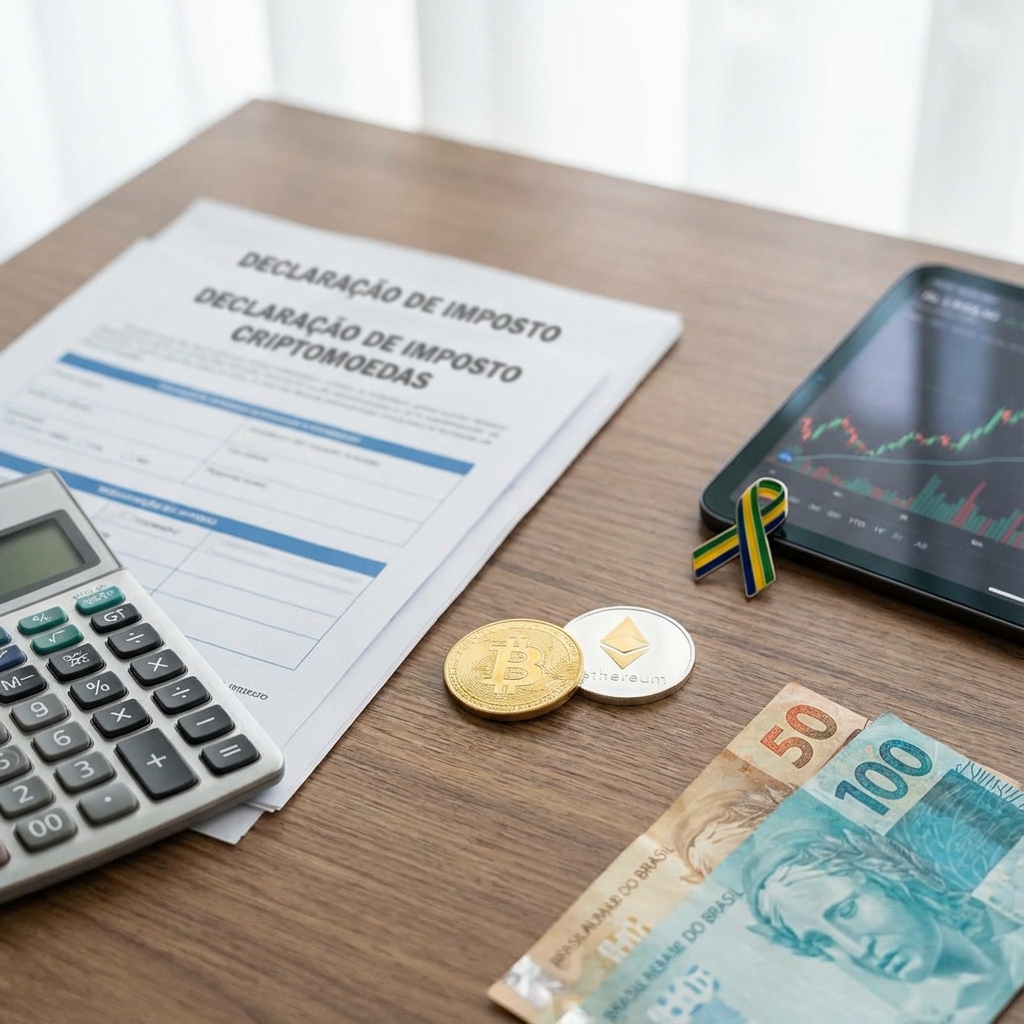
Ficha "Bens e Direitos", código 81. Informe exchange/carteira, quantidade e valor de aquisição em 31/12. Vendas mensais > R$ 35k geram ganho de capital (15-22,5%). Use controle de custo médio (FIFO).
Qual a diferença entre exchange e carteira?
Exchange (corretora) guarda suas chaves (custodial) — risco de contraparte. Carteira (wallet) você guarda as chaves (non-custodial) — responsabilidade total sua. "Not your keys, not your coins".